A Shared Courtyard, Planned for a Quiet Afternoon
Plan a shared courtyard gathering with comfortable seating, clear access and a simple finish, so neighbours can share the space without disrupting daily routines.
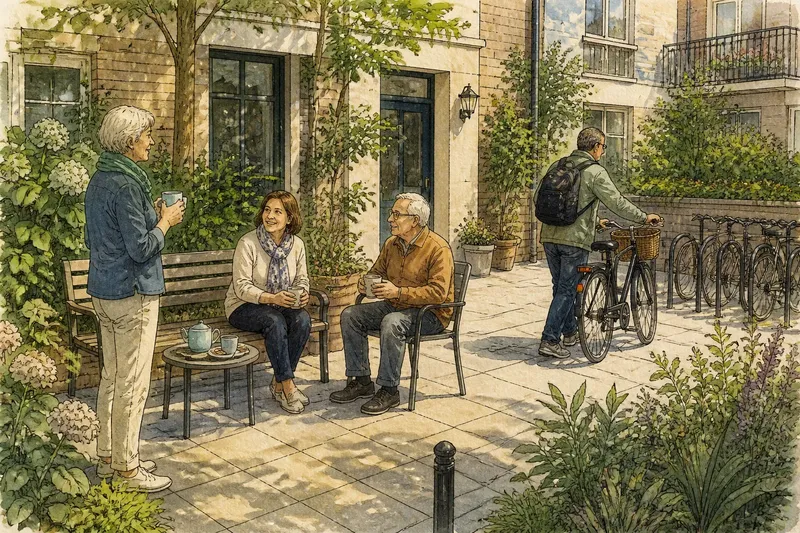
A neighbour pauses by the courtyard bench with a mug, while someone else wheels a bicycle towards the racks. A shared courtyard gathering can fit around these everyday comings and goings if it is planned as a temporary use of the space, not an event that takes it over. The details that matter most are access, the building’s rules and a tidy return to normal use.
Start with the courtyard’s ordinary routines
Before choosing a date, notice what the courtyard is already for. Residents may use it to reach their flats, store bicycles, put out rubbish or sit quietly. Keep those uses possible during the gathering, and avoid treating an empty patch of paving as available simply because it looks unused.
Walk the route from the entrance to the doors, bins and bike racks. Look for gates that swing open, narrow turns and surfaces that become slippery in wet weather. If you cannot leave a clear route around the proposed seating, move the gathering or choose a different shared place.
Check the building notice or ask the manager whether residents may bring chairs, serve refreshments or use the courtyard at the planned time. Rules vary between buildings. If permission is needed, get the answer before inviting people rather than asking neighbours to arrive for a plan that may have to change.
Use a small layout that does not claim the space
Start with furniture already in the courtyard. A few movable chairs near an existing bench can make a spot for conversation without creating a barrier across the paving. Angle seats so people can talk, but leave an open approach for anyone arriving or passing through.
Choose stable, clean seats suited to the ground. A chair with a back may work better than a ledge, while someone using a mobility aid may need room to stay alongside the group rather than transfer into a seat. If the courtyard has no easy route to the proposed spot, change the layout instead of expecting a guest to ask for furniture to be shifted.
Think about weather and the time of day. A sunny corner can become uncomfortable, and a sheltered spot may be better if the forecast is uncertain. Do not attach a canopy or leave equipment in place unless the building permits it and it will not obstruct access.
Make a plan that fits shared-space rules
Keep the gathering modest enough to coexist with the courtyard’s usual use. Avoid amplified sound, large furniture or activities that spread into doorways and paths. If the gathering involves anything beyond a casual sit-down, such as a grill or powered equipment, check the building’s rules and relevant local guidance first; do not assume the courtyard is suitable.
Plan how rubbish and borrowed items will be handled before setting anything out. Put a bag near the refreshments, keep cups on a stable surface and decide who will return any chairs. A useful plan is one that leaves no new job for the next resident who uses the space.
Check the practical details before you invite neighbours
Walk through the intended arrangement and use each observation to decide whether to proceed, adjust the plan or choose another location.
- Check whether the route to entrances, bins and bike racks stays clear; if it does, keep the layout, but if it narrows or blocks access, move the chairs or choose another place.
- Check the courtyard notice or ask the building manager about chairs and refreshments; if the plan is allowed, proceed, but if permission is needed or refused, obtain it or change the plan.
- Check that every chair is stable on the paving; if it is, use it, but if it wobbles or rocks, remove it and use a sound existing seat.
- Check whether the gathering spot is exposed to sun, wind or rain at the planned time; if it seems comfortable, keep the time, but if not, choose a more suitable hour or postpone.
- Check that the route and seating arrangement leave room for a mobility aid; if they do, keep the layout, but if they do not, widen the approach or relocate the gathering.
- Check where cups, food and rubbish will go; if there is a stable surface and a clear clean-up plan, proceed, but if not, simplify the refreshments or leave them out.
- Check whether nearby residents could be disturbed by the proposed sound or activity; if the plan is quiet, keep it, but if it is likely to carry, reduce the activity or use another venue.
What should a courtyard gathering invitation include?
Give neighbours enough information to decide whether the plan suits them: what the gathering is, its exact spot in the courtyard, when it starts and what the arrangements are for access, weather and clean-up. A notice on the entrance board can reach residents who do not use a building chat; the same details can be shared through an established residents’ group.
Imagine you have permission to use the bench area, and the entrance path runs beside it. You plan a quiet tea gathering there, but your first sketch puts two chairs across the route. You move them beside the bench, check that the doorway and bike access remain clear, then post a notice naming the bench area, start time, rain plan and contact route for access questions. The resulting decision is to use the revised layout only if the route remains unobstructed; otherwise, you will move the gathering to a permitted shared room. This keeps the invitation tied to a workable plan rather than asking neighbours to resolve the layout on arrival.
How should you handle a quiet or crowded gathering?
What if nobody talks much?
Let people sit, read or chat in pairs without turning silence into a problem. If conversation stalls, offer a simple topic, such as how residents use the courtyard, and let people respond or leave it there.
What if more people arrive than the space can hold?
Keep the route clear and do not add chairs where they obstruct access. If the remaining space cannot accommodate extra seating comfortably, explain that the gathering is full for now and suggest a permitted alternative or another date.
Do neighbours need to bring refreshments?
No, unless the invitation specifically says the gathering is organised around a shared contribution. State whether anything will be provided, and make clear if bringing food or drink is optional.
What should happen if the weather changes?
Name the fallback in the invitation, such as postponing and posting an update on the entrance notice. If there is no sheltered place or suitable alternative, postpone rather than moving into a space that has not been approved.
Leave the courtyard ready for its next use
When the gathering winds down, collect cups and wrappers, wipe any surface that needs attention and return borrowed furniture. Check the paths, doorway and shared equipment area before leaving. If something has been damaged or a spill needs more than an ordinary clean-up, tell the building manager rather than leaving it for someone else to discover.
A shared courtyard gathering works best when its footprint is easy to see and easy to remove. Keep the route open, follow the building’s arrangements and leave the space ready for the next neighbour; those practical habits make it easier to share the courtyard again.