The Welcome Table: Small Details That Help Newcomers Join In
A welcoming gathering starts with clear invitations and easy ways to take part, helping newcomers settle in without being asked to perform on arrival.
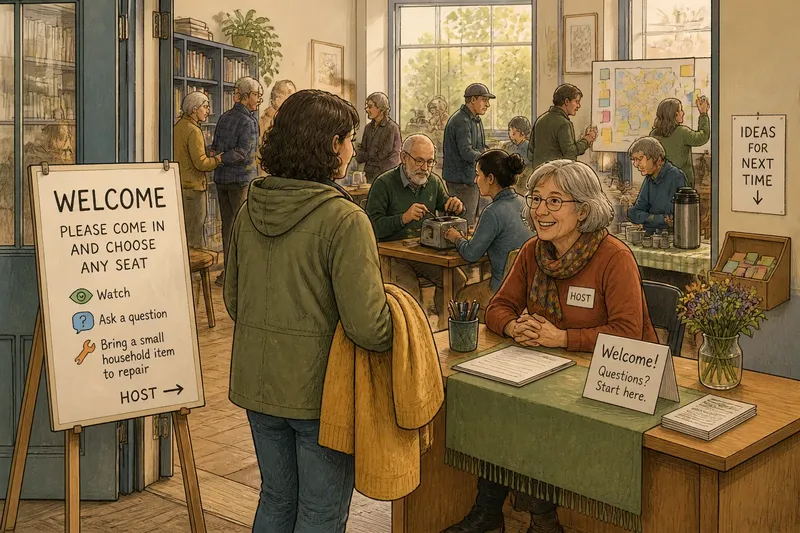
At a neighbourhood supper, someone pauses by the doorway with a coat over one arm, unsure whether to find a seat or wait to be greeted. A welcome table can soften that moment, but its real work is done by small, legible choices: a clear invitation, a name offered without pressure, and something useful to do. These details help newcomers join in while leaving them room to choose how much to say.
Make the invitation answer ordinary questions
A friendly message can still leave a newcomer guessing. “Come along on Thursday” does not say whether the event is open to anyone, whether children can attend, what happens there, or whom to look for at the door. Add the practical details people need to decide whether they can come.
- Say who is welcome. Name the intended audience plainly, including whether someone can come alone or bring a friend.
- Describe the gathering. “Shared tea and a short discussion about the garden” is easier to picture than “community catch-up”.
- Give a recognisable arrival point. Mention the library side entrance, hall foyer or other local landmark rather than assuming everyone knows the building.
- Explain what to bring. If nothing is needed, say so. If people may bring food or materials, make clear that this is optional unless it genuinely is not.
- Offer a contact route. Give a way to ask about access, timing or the format before attending.
Keep the tone warm, but let the information carry its weight. A newcomer should not need to send a private message just to discover whether they are allowed to walk in.
Give the doorway a clear first move
Arriving is often the most exposed part of joining. A person may not know whether to sign in, find a chair, take a cup or interrupt a conversation. Put a small sign where it can be seen from the entrance, with a simple direction such as “Please come in and choose any seat”. If there is a host, name them and show where they are likely to be.
Keep the welcome point uncluttered. A sheet for names, a few pens and a note about the evening can be useful; a pile of forms, several competing notices and a donation box can make the first task feel like an exam. The aim is to answer the next question, not to explain the whole organisation before someone has sat down.
Say you are hosting a repair café in a library room. You place a sign at the entrance saying that visitors can watch, ask a question or bring a small household item, and you mark the table where the host is seated. A newcomer who has come only to look can head there without having to interrupt a group already talking.
Offer introductions that leave room to pass
Names help people begin, but a circle of compulsory introductions can put newcomers under a bright social spotlight. Instead, let people arrive and settle before offering a light introduction. A host might say, “This is Sam, who has come to hear about the allotment beds,” then give Sam a natural way into the conversation without demanding a speech.
Make passing an ordinary option. If the gathering includes a round of names, say that people can simply give their name or listen. Avoid asking each person to share a personal story, explain why they came or announce something they are proud of. Those prompts may suit close-knit groups, but they can feel intrusive before trust has had time to grow.
Introduce people through a shared point of interest rather than a label. “Mina knows the path by the river and can show you the map” offers a useful connection. “Mina is our shy new volunteer” defines someone publicly and can make them feel watched.
Make participation visible and optional
Newcomers often want to help but cannot tell what help is welcome. Put a few low-pressure tasks in plain sight: sorting recipe cards, adding a suggestion to a map, pouring tea or carrying a stack of flyers to the table. A visible task is an invitation, not an assignment, when people can decline without explanation.
Use materials that explain themselves. A map with sticky notes beside it invites people to mark a place; a blank board with no prompt leaves them wondering what belongs there. A tray labelled “Ideas for next time” makes a contribution possible without requiring someone to speak in front of the room.
Keep the tasks varied. Some people enjoy talking; others prefer a quiet, practical role. Offer a choice between joining a conversation, helping with a small job or simply observing. A welcome table should work like a coat hook: it gives people somewhere to put what they have brought, without insisting they unpack everything at once.
Keep the host’s attention moving
A host who spends the whole evening with the newest person may mean well, but can make that person feel singled out. A host who never breaks away can leave them stranded. Make a brief connection, point out one or two useful features of the gathering, then help them find a way to join a wider conversation.
One simple handoff is to introduce two people who share a practical interest, then remain nearby long enough for the conversation to start. Another is to show where refreshments are and mention when the next activity begins. These small cues give someone a route through the room without turning their arrival into the evening’s main event.
If several newcomers are expected, ask a regular to be an additional greeter. Agree on a simple role beforehand: notice people entering, answer basic questions and point out the host. This spreads the welcome across the group instead of making one person responsible for every introduction.
Notice who can take part in the room
A gathering can sound welcoming while its room quietly gets in the way. Check that the entrance is easy to identify, the welcome point is not blocking the route, and there is somewhere to sit without having to ask. Put signs at a readable height and use plain wording rather than club shorthand. If the event involves noise, movement or shared food, say so in the invitation so people can decide what suits them.
Do not assume that every newcomer wants the same kind of help. Some appreciate a personal greeting; others would rather read a sign and choose a seat alone. Make both possible: greet people when they look ready to engage, while keeping essential directions visible for those who prefer not to start a conversation.
For arrangements that depend on a venue’s access rules or a local requirement, check with the venue or relevant organiser and describe the options accurately in the invitation.
Use these questions to check the welcome
What should a newcomer know before attending?
They need to know who is welcome, what the gathering involves, where to arrive and whether anything is expected of them. Include a contact route for questions that cannot be answered in the invitation.
How can introductions feel less awkward?
Offer names and a shared point of interest, then leave room for a short reply or no further explanation. Make listening or passing a normal choice rather than a special exemption.
What can someone do if they do not want to talk?
Provide a visible, optional activity such as placing a note on a map, sorting materials or having a cup of tea. Make it equally clear that observing is welcome too.
How can organisers tell whether the welcome was clear?
After the gathering, ask a regular attendee to describe what a first-time visitor would see and do on arrival. If they cannot identify the entrance, host or first available choice, adjust the signs or invitation before the next event.
Let the welcome continue after the first visit
Joining in does not have to mean signing up for a role before leaving. Tell newcomers what happens next and how to hear about it, then offer a way to stay in touch without making a commitment feel compulsory. A small card with the next gathering’s details, or a note about where future notices appear, can be enough.
When the event ends, thank people for coming without asking them to account for how much they contributed. If someone offered a suggestion, mention where it will go next; if they mostly listened, let that count as taking part. The best welcome table makes the next visit easier to imagine—and leaves the newcomer free to decide whether to make it.